 open-ortho
Clinical interoperability based on open standards.
Correct Open Software for Healthcare
What is Open-Ortho?
“Ortho” comes from the Greek ὀρθός — meaning correct or proper. Open-Ortho is not limited to ortho- medical specialities like orthodontics or orthopaedics. It is about correct open software: software built on open, public standards, for all clinical and medical providers.
Our mission is to restore clinical autonomy to healthcare providers through true interoperability.
A Freedom That Was Lost
Before software, providers were in control of their own workflows.
If a clinician wanted to optimize their charting process — perhaps after a conference, or a conversation with a colleague — they could simply do it. Redesign the form, take it to the printer, have a thousand copies made, and be in production with the improved version within a week.
That freedom is gone.
Today’s Reality
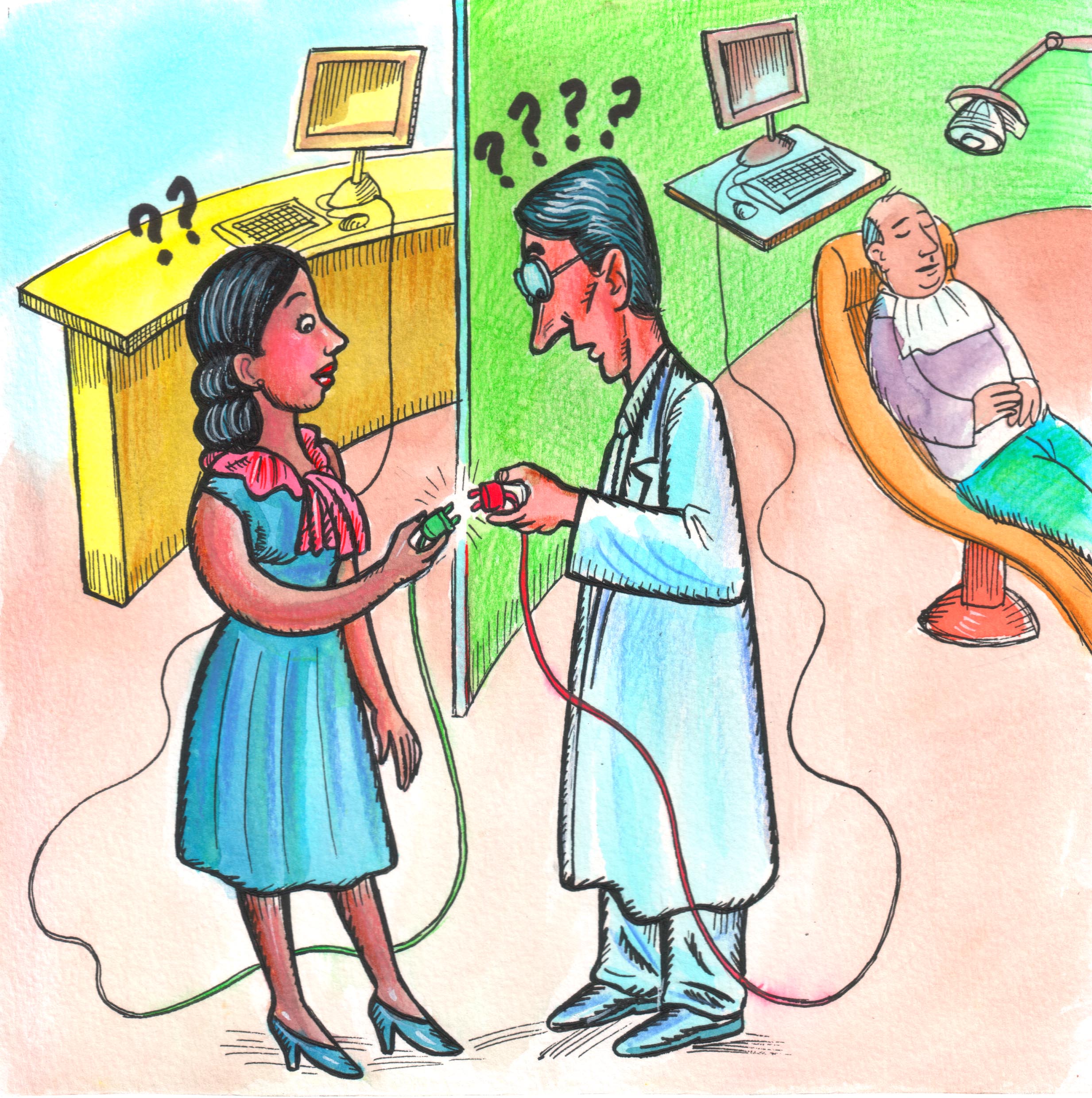
Providers today settle for whichever software best covers their needs — which typically means the areas tied to revenue. Everything else is left to chance.
When a provider wants to improve a workflow that their software does not handle well, their options are bleak:
- Submit a feature request — which, in the best case, enters a queue and gets implemented only if enough other users ask for the same thing. The vast majority of ideas are never built.
- Find a product that does it — only to discover that the feature they want is bundled inside an entire monolithic platform. Purchasing the whole platform is often economically unfeasible, and even if they do, there is still no sustainable way to connect it to their existing software.
- Commission a custom integration — which ends up being prohibitively expensive, fragile, and difficult to maintain.

The result: providers have less control over their clinical workflows today than they did in the paper era.
The Root Cause: Proprietary Lock-In
The problem is not the software vendors. It is the ecosystem — and what vendors have been taught to believe about how to make money.
Vendor lock-in is a well-established and genuinely effective business model. Once a provider is deeply integrated into a platform, switching costs are enormous. Vendors know this, and naturally build around it. This is not malice — it is rational behavior in the absence of a better model. What most vendors have not yet considered is that interoperability-based business models exist, have been proven in other industries, and have the potential to explode the market rather than carve it up. See how open standards change the economics for vendors →
History is full of industries that made this transition. Screws and bolts were once proprietary to each manufacturer — until thread standards emerged and hardware became interchangeable. Electrical outlets, train gauges, shipping pallets, and telephone signaling all went through the same shift: fragmentation first, then standardization, then an explosion in trade, tooling, and innovation that no single proprietary player could have achieved alone. Global market has skyrocketed.
Shipping containers are perhaps the clearest example. Before them, freight moved as loose cargo — individual bags, boxes, and crates loaded and unloaded by hand, with goods lost, stolen, or damaged along the way. Standardized containers changed everything. Today, if you asked a courier to ship your goods without using standard containers, they would not negotiate a workaround. They would tell you to deliver it yourself — because no serious logistics operation would regress to that world.
That is the world we want for clinical software. And the state we are in today — before that shift — is exactly the state freight was in before the container. Read more about how standardization transformed other industries →
Our Vision
We believe in a healthcare software ecosystem built on open standards — where products speak a common language by default.
Standards like HL7 FHIR, DICOM, IHE profiles, LOINC, SNOMED CT / SNODENT, and the EU’s EHDS framework already exist. They are proven, widely adopted in adjacent fields, and ready to use. What is missing is the expectation that vendors will use them.
In the world we are working toward:
- Vendors build focused products that solve specific problems well, and expose them through open standard interfaces.
- Providers pick and choose the tools that fit their practice, and connect them like building blocks into their own clinical network.
- Asking a vendor to connect via a proprietary API is met with the same reaction as asking a courier to ship without containers — it simply would not be done.
- Vendors benefit too: they can sell individual modules to anyone, while still offering bundled platforms — reaching orders of magnitude larger markets than today.
The Research Problem
Clinical data locked in proprietary silos does not just hurt individual providers — it stunts medical research. Studies that could reach tens of thousands of patients across many practices are impossible today because harmonizing fragmented, non-standardized data is prohibitively expensive; open standards would not fix this overnight, but they would steadily make it feasible.
The research case for interoperability →
Part of a Broader Movement
Open-Ortho is not alone. From the openEHR Foundation to SMART Health IT, a growing number of organizations share the conviction that clinical software must be built on open standards. See how we relate to — and differ from — the other initiatives in this space →
Current contributors include members of ADA SC WG 11.6 and medoco HEALTH. Meet the contributors →
Why This Matters
The Problem in Depth
Our Solution
Strategic Plan
- Facilitate adoption of open standards through education and simplification.
- Engage all actors in the clinical community:
See How it can be done for details.